


Regulatory and Compliance Guide for Electrotherapy Devices
- Understanding Safety and Regulations for Electrotherapy
- How electrotherapy devices are classified and why it matters
- Major regulatory frameworks: FDA, EU MDR, China NMPA (comparison)
- Applicable standards and technical requirements for electrotherapy devices
- Design and risk management specific to electrotherapy devices
- Clinical evaluation and evidence requirements for electrotherapy devices
- Software, cybersecurity, and electrical stimulation controls
- Quality management and manufacturing controls (ISO 13485)
- Labeling, instructions for use, and user training for electrotherapy devices
- Post-market surveillance (PMS), vigilance, and real-world evidence
- Practical regulatory roadmap for manufacturers of electrotherapy devices
- Comparing safety test requirements (example tests and when they apply)
- Regulatory challenges and common nonconformities for electrotherapy devices
- Industry example: Longest Medical — product and compliance strengths
- FAQs — Regulatory and compliance for electrotherapy devices
- 1. What regulatory classification applies to my electrotherapy device?
- 2. Do I always need clinical trials for electrotherapy devices?
- 3. Which standards are essential for electrical safety testing?
- 4. How should I manage risk around patients with pacemakers or ICDs?
- 5. What are post-market requirements I must plan for?
- 6. How can Longest Medical help with my product strategy?
- References
Understanding Safety and Regulations for Electrotherapy
Electrotherapy devices — including TENS, NMES, functional electrical stimulation (FES), and other therapeutic stimulators — are widely used in rehabilitation, pain management, and aesthetic medicine. Because these devices intentionally deliver electrical energy to the body, regulators treat them as medical devices with specific safety, performance, and clinical evidence requirements. This guide explains how to navigate regulatory pathways for electrotherapy devices, what technical and clinical evidence you need, and practical compliance steps to bring a safe, effective product to market.
How electrotherapy devices are classified and why it matters
Regulatory classification determines the conformity assessment route, the amount of clinical evidence required, and post-market obligations. Classification depends primarily on intended use, indications, and the nature/extent of energy delivered. For example, a low-voltage over-the-counter TENS device for symptomatic relief of minor pain may face a lower regulatory burden than a prescription neuromuscular electrical stimulator used for muscle re-education after stroke.
Key classification drivers for electrotherapy devices:
- Intended user and setting (consumer vs. healthcare professional).
- Indications (symptomatic relief vs. treatment of a disease state).
- Anatomical region and duration of use (implantable vs. transcutaneous; short vs. long term).
- Potential hazards from electrical stimulation (cardiac risk, interference with implanted devices, burns, tissue damage).
Major regulatory frameworks: FDA, EU MDR, China NMPA (comparison)
Below is a concise comparison of regulatory routes for electrotherapy devices in key markets. This helps manufacturers align development and documentation strategies for multi-market launches.
| Region | Typical classification | Conformity path | Key technical/clinical requirements |
|---|---|---|---|
| USA (FDA) | Usually Class II (special controls) for TENS/NMES; some higher-risk uses may be Class III | 510(k) premarket notification if predicate exists; PMA if novel/high risk | Electrical safety and EMC (IEC 60601), biocompatibility (ISO 10993), labeling, clinical performance data as needed |
| EU (MDR 2017/745) | Class IIa/IIb depending on risk and duration; higher if invasive or affects vital functions | Conformity assessment via Notified Body (technical documentation, clinical evaluation report) | Clinical evaluation per MDR Annex XIV, risk management (ISO 14971), QMS (ISO 13485), electrical safety (IEC 60601) |
| China (NMPA) | Class II or III based on risk | Registration with clinical/technical review; local testing often required | Local testing and clinical data; Chinese-language technical documentation; post-market vigilance |
Sources: FDA, EU MDR, NMPA guidance (see references).
Applicable standards and technical requirements for electrotherapy devices
To demonstrate safety and performance, manufacturers typically must address a suite of international standards. Key standards include:
- IEC 60601-1: Medical electrical equipment — General requirements for basic safety and essential performance (electrical safety).
- IEC 60601-1-2: Electromagnetic compatibility (EMC) requirements.
- IEC 60601-2-10: Particular requirements for nerve and muscle stimulators (applies to many electrotherapy devices).
- ISO 13485: Quality management systems for medical devices (design, manufacturing, QMS).
- ISO 14971: Risk management for medical devices.
- IEC 62304: Software lifecycle processes (if device contains software or firmware).
- ISO 10993 series: Biocompatibility testing for applied parts or electrodes.
Conformity to these standards (or justification of deviations) forms the backbone of technical documentation and clinical safety claims.
Design and risk management specific to electrotherapy devices
Risk management must be tailored to stimulation-specific hazards: unintended activation, excessive current, DC leakage, patient burns under electrodes, interference with pacemakers/ICDs, and incorrect parameter delivery. Practical steps:
- Perform a thorough hazards analysis and FMEAs for electrical circuits, electrode-skin interface, and software control loops.
- Define safe default parameters, maximum limits, and watchdogs for stimulation duration and amplitude.
- Include hardware/firmware redundancy for critical functions and documented verification tests (e.g., leakage current, current accuracy, pulse shape).
- Evaluate electromagnetic immunity and emission to reduce risk of malfunction in realistic clinical environments (IEC 60601-1-2 testing).
- Consider interoperability and labeling warnings for patients with implanted electronic medical devices.
Clinical evaluation and evidence requirements for electrotherapy devices
Clinical evidence must support safety and intended performance. The depth of clinical evidence depends on risk classification and whether a suitable predicate exists. Strategies include:
- Systematic literature review of similar devices and published clinical studies.
- Bench and preclinical testing to establish mechanism and safety margins.
- Prospective clinical studies when existing literature is insufficient — randomized controlled trials for therapeutic claims, or observational studies for low-risk comfort claims.
- Clinical evaluation report (CER) for EU MDR; summary of safety and performance for FDA 510(k) submissions where clinical data support equivalence.
Example: For a novel NMES device claiming improved post-stroke muscle re-education, regulators will expect clinical endpoints, device parameter rationale, and safety monitoring data rather than only bench testing.
Software, cybersecurity, and electrical stimulation controls
Many modern electrotherapy devices include software for waveform control, data logging, or remote monitoring. Compliance steps:
- Follow IEC 62304 for software lifecycle and risk control measures.
- Implement cybersecurity risk management (NIST or ISO/IEC 27001 principles) for devices with connectivity; document threat models and mitigations.
- Define software verification and validation, including unit tests, integration tests, and clinical safety validation of algorithm-driven stimulation profiles.
Quality management and manufacturing controls (ISO 13485)
A robust QMS ensures reproducible product quality, traceability, and regulatory compliance. Core elements to implement early include:
- Design control, design transfer, and verification/validation records.
- Supplier qualification and incoming inspection for critical components (stimulators, power supplies, electrodes).
- Process validation for manufacturing steps that affect performance (potting, coating, electrode assembly).
- Nonconformance handling, CAPA, and management review mechanisms.
- Device history records, batch records, and traceability enabling recalls or field corrections if needed.
Labeling, instructions for use, and user training for electrotherapy devices
Clear labeling is vital to safe use. Documentation should include:
- Indications, contraindications (e.g., pregnancy, pacemakers), warnings about implanted electronic devices, and adverse effects.
- Detailed user instructions on electrode placement, parameter selection, and maintenance.
- Cleaning/disinfection methods and electrode replacement intervals (with biocompatibility justification).
- Symbols and translations for target markets; UDI (Unique Device Identification) requirements where applicable.
Post-market surveillance (PMS), vigilance, and real-world evidence
Regulators expect active post-market surveillance to detect rare adverse events or long-term issues. Implement:
- Complaint handling and trending analysis for malfunctions or adverse events.
- Periodic safety update reports (PSURs) or post-market clinical follow-up (PMCF) when required by EU MDR.
- Robust systems to report adverse events to regulatory bodies (e.g., FDA MAUDE, EU EUDAMED when fully implemented).
- Use real-world data to refine labeling, training, and design updates; keep technical documentation current.
Practical regulatory roadmap for manufacturers of electrotherapy devices
- Define intended use and target markets; perform preliminary classification analysis.
- Establish an ISO 13485-compliant QMS and appoint a regulatory lead (EU: Authorized Representative if needed).
- Perform risk management per ISO 14971 and identify applicable standards (IEC 60601-1, IEC 60601-2-10, IEC 62304, ISO 10993).
- Generate technical documentation: design dossier, verification & validation reports, clinical evaluation, labeling, software documentation.
- Engage a Notified Body (EU) or prepare a 510(k)/PMA strategy for FDA; plan local testing/clinical requirements for China or Japan as needed.
- Plan post-market surveillance and a robust cybersecurity maintenance program for software updates and vulnerability management.
Comparing safety test requirements (example tests and when they apply)
| Test | Purpose | Applicable standard(s) |
|---|---|---|
| Electrical safety (leakage current, protective earth) | Prevent shock and burns | IEC 60601-1 |
| EMC emissions & immunity | Ensure device works in clinical electromagnetic environments | IEC 60601-1-2 |
| Stimulation output accuracy and waveform characterization | Confirm delivered dose matches settings | IEC 60601-2-10 (nerve & muscle stimulators) |
| Biocompatibility (electrodes, gel) | Ensure applied parts are safe for skin contact | ISO 10993 series |
Regulatory challenges and common nonconformities for electrotherapy devices
Manufacturers often fail due to insufficient clinical justification, incomplete risk analyses regarding implanted devices interaction, lack of robust software lifecycle documentation, or weak post-market surveillance processes. Early engagement with regulators or notified bodies and careful planning of clinical evidence can prevent costly delays.
Industry example: Longest Medical — product and compliance strengths
Founded in 2000, Longest Medical is a leading global rehabilitation and aesthetic solutions company, focusing on non-invasive medical solutions. Its product portfolio includes shock wave therapy, compression therapy, electrotherapy, electrostatic oscillation therapy, cryotherapy, ultrasound therapy, and active-passive trainers. These product lines address physical therapy, neurological rehabilitation, postoperative recovery, veterinary diagnosis and treatment, and medical aesthetics.
Why consider Longest Medical as a supplier or partner:
- Comprehensive product range (shockwave therapy machine, focused shockwave therapy machine, electrical muscle stimulation machine, air relax compression, active passive trainer, compression therapy machine, DVT medical device, lymphatic massage device, Pressotherapy machine) enabling solution bundles for clinics.
- Two decades of market presence indicating process maturity and supply-chain experience.
- Focus on non-invasive therapies which typically lower implant-related risks while still demanding rigorous electrical safety and clinical evidence.
- Ability to support product documentation and technical specifications required for regulatory submissions in multiple markets.
When selecting a supplier, confirm specific regulatory support services they provide (e.g., technical file templates, clinical literature, testing reports, local registration assistance) and review their ISO 13485 certification and relevant test reports (IEC 60601 series, biocompatibility testing).
FAQs — Regulatory and compliance for electrotherapy devices
1. What regulatory classification applies to my electrotherapy device?
Classification depends on intended use, indications, mode of use, and risk. Low-intensity devices for symptomatic pain relief may be lower risk, while prescription NMES or implantable stimulators are higher risk. Conduct a classification assessment for each target market early in development.
2. Do I always need clinical trials for electrotherapy devices?
Not always. If sufficient literature and predicate device data exist, you may rely on a clinical evaluation or literature-based evidence. However, novel indications, new stimulation modalities, or significant design changes often require prospective clinical studies.
3. Which standards are essential for electrical safety testing?
IEC 60601-1 (general safety), IEC 60601-1-2 (EMC), and IEC 60601-2-10 (nerve and muscle stimulators) are central for electrotherapy devices. Complementary standards include ISO 10993 (biocompatibility) and IEC 62304 (software).
4. How should I manage risk around patients with pacemakers or ICDs?
Include specific contraindications and warnings in labeling, perform electromagnetic interference (EMI) testing where relevant, and conduct a risk assessment considering possible interactions. If intended for populations where implanted cardiac devices are common, additional clinical or bench testing may be required.
5. What are post-market requirements I must plan for?
Implement complaint handling, vigilance reporting, periodic safety updates (EU MDR), and PMCF if required. Track adverse events, perform trend analyses, and be prepared to issue corrective actions or field safety notices.
6. How can Longest Medical help with my product strategy?
Longest Medical offers a broad portfolio of non-invasive therapy devices and can provide technical specifications, regulatory test reports, and product bundles that simplify procurement for clinics. Evaluate their ISO certifications and test documentation when considering partnership.
If you need tailored regulatory support, clinical study design, or product selection for clinic deployment, contact Longest Medical’s regulatory and product team to discuss your project and review available devices and compliance documentation. Visit Longest Medical to view product specifications and request technical files or consultation.
References
- U.S. Food & Drug Administration — Classify Your Medical Device. https://www.fda.gov/medical-devices/classify-your-medical-device. Accessed 2025-11-20.
- Regulation (EU) 2017/745 of the European Parliament and of the Council (MDR). https://eur-lex.europa.eu/eli/reg/2017/745/oj. Accessed 2025-11-20.
- ISO 13485:2016 — Medical devices — Quality management systems. https://www.iso.org/standard/59752.. Accessed 2025-11-20.
- ISO 14971:2019 — Medical devices — Application of risk management. https://www.iso.org/standard/72704.. Accessed 2025-11-20.
- IEC 60601 series — Medical electrical equipment standards (IEC Webstore overview). https://www.iec.ch/standards. Accessed 2025-11-20.
- IEC 62304 — Medical device software — Software life cycle processes. https://www.iso.org/standard/62487.. Accessed 2025-11-20.
- U.S. FDA — Medical Device Reporting (MDR) and Medical Device Postmarket Surveillance. https://www.fda.gov/medical-devices/postmarket-requirements-devices. Accessed 2025-11-20.
- China National Medical Products Administration (NMPA) — Medical Device Registration. http://www.nmpa.gov.cn/ (site overview and guidance). Accessed 2025-11-20.
Contact/Request Info: For product datasheets, regulatory documentation support, or to discuss a compliance roadmap for your electrotherapy device, contact Longest Medical’s regulatory team or visit their website to request technical files and consultation.
Does Compression Therapy Actually Work? An In-Depth Look by Longest Medical
Chinese Medical Device Manufacturers: Leading Innovation in Rehabilitation & Aesthetic Solutions
Wholesale aesthetic medical device manufacturer and supplier
The B2B Buyer’s Guide to shockwave therapy machine | Longest Ultimate Insights
2500X
Is OEM/ODM service available?
Yes. Contact us for more details. We offer professional OEM/ODM services.
LGT-231
How long does it take to see results from using the low - frequency electrical stimulation device?
Results vary from person to person. For muscle strength improvement, it may take several weeks of regular use. For pain relief, some people may notice a difference after a few sessions, while for others, it may take longer. Consistency in use as directed is key to achieving the best results.
LGT-2410S W
How is the quality of the product guaranteed?
Longest medical's rehabilitation bike is made of high-quality materials and undergoes a rigorous quality inspection process to ensure its sturdy structure and stable and reliable performance. The electronic components and transmission system of the device are carefully designed and tested to withstand long-term use and ensure safety and accuracy during use.
2410S-Mechine
What kind of after-sales service does the LGT 2410S come with?
We offer comprehensive after-sales service, including technical support, regular equipment maintenance guidance, and prompt response to any operational or technical issues that may arise.
LGT-2640AP Electromagnetic Stimulator for Pelvic Floor Rehabilitation
What software functions does the LGT-2640AP Electromagnetic Stimulator have?
- Pre-installed with 24 pelvic floor magnetic stimulation prescriptions, each with a part diagram
- Patient case data recording and management, which can memorize the patient's last treatment parameters for quick start of treatment
- Account management system with doctor login function
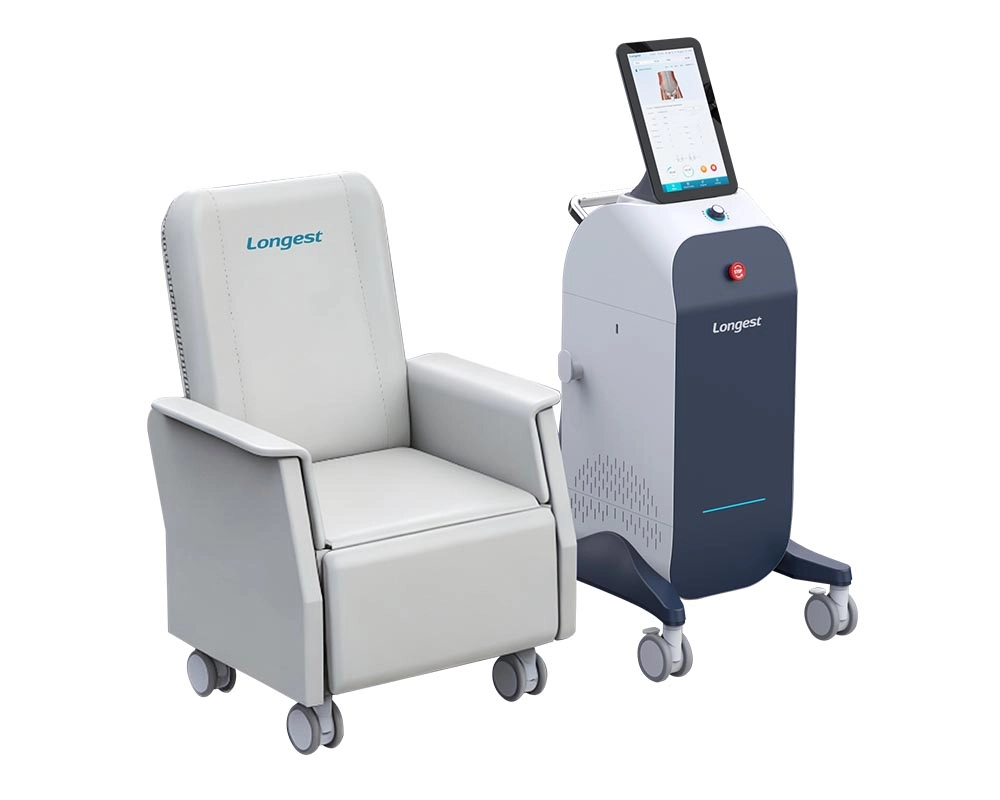
Electromagnetic Stimulator for Pelvic floor rehabilitation LGT-2640AP
The LGT-2640AP Pelvic Floor Magnetic Stimulator is a precision rehabilitation device designed for targeted pelvic floor therapy. Featuring 24 visualized preset protocols (paired with anatomical diagrams), customizable treatment plans, and a pre-adaptation function, it delivers non-invasive, painless stimulation to support postpartum recovery, male pelvic floor rehabilitation, and geriatric pelvic health.
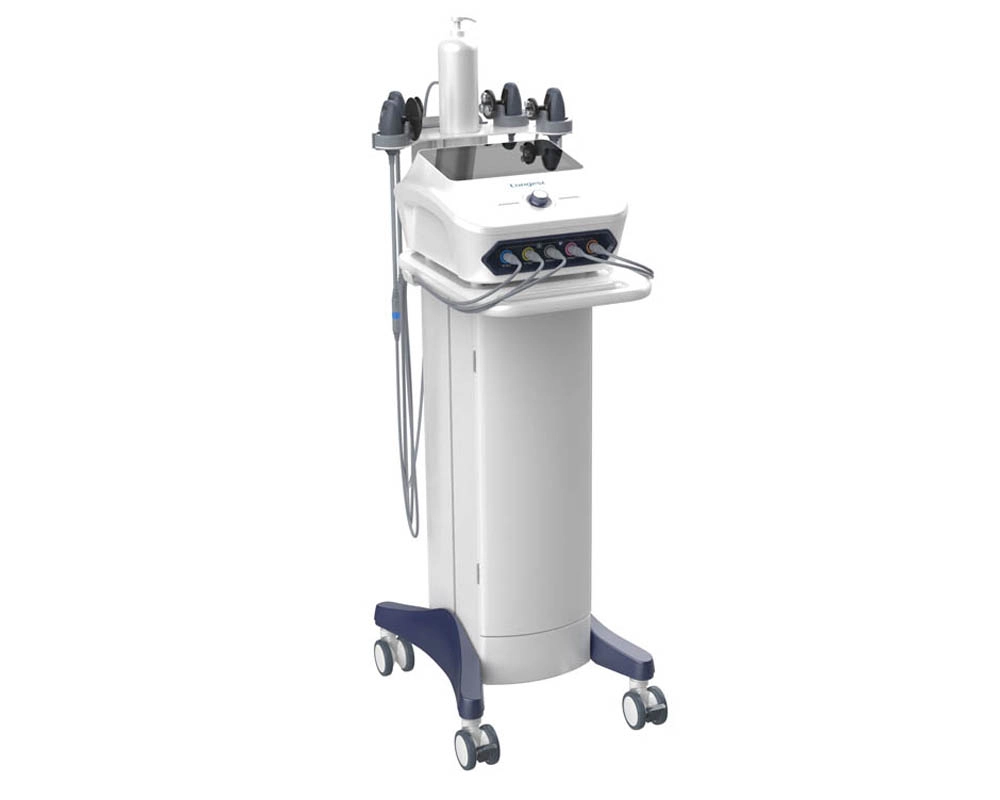
High-Frequency Therapy Device LGT-3500GP(Desktop Design)
LGT-3500GP fits tight spaces without sacrificing performance. Equipped with full TECAR tech, dual tissue-targeting modes, and core safety features, it handles post-op rehab, shallow tissue care, and more—lightweight, durable, and perfect for space-conscious facilities.
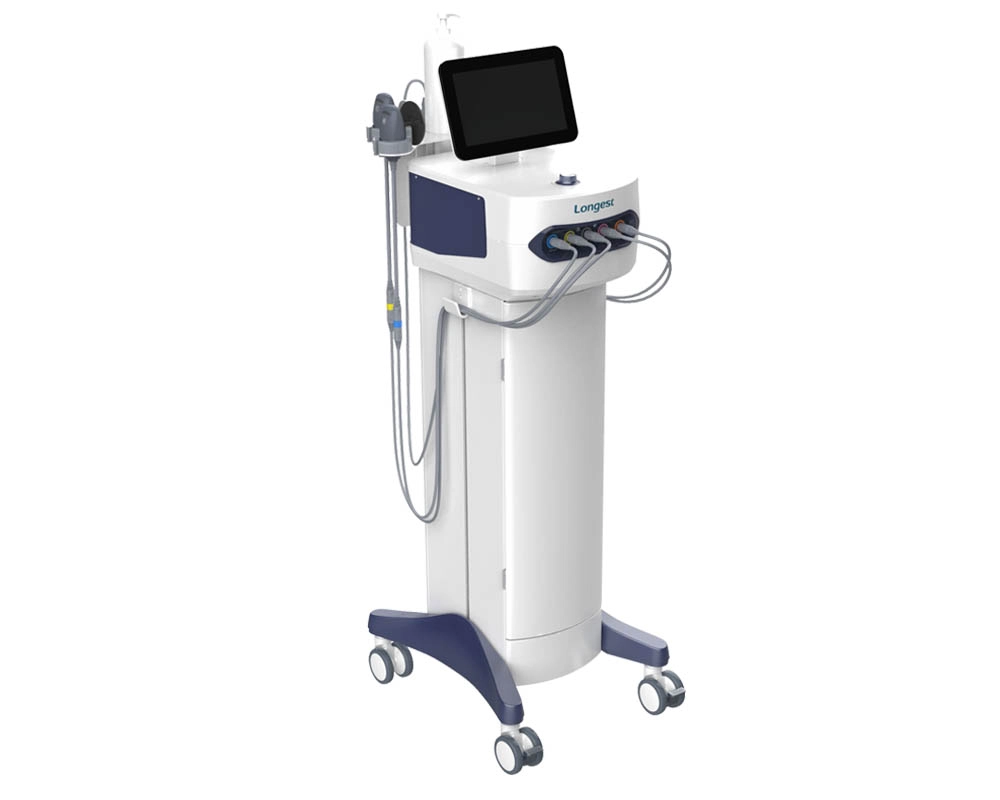
High Frequency Therapy Device LGT-3500LP(Upright Design)
The LGT-3500LP has an upright design with plenty of storage and rolling casters for easy mobility. It uses TECAR Therapy, and it has dual CET/RET modes, 300 KHz~1 MHz frequencies, and safety features like real-time temperature monitoring. This gives you precise, efficient treatments for deep tissue repair and pain relief.
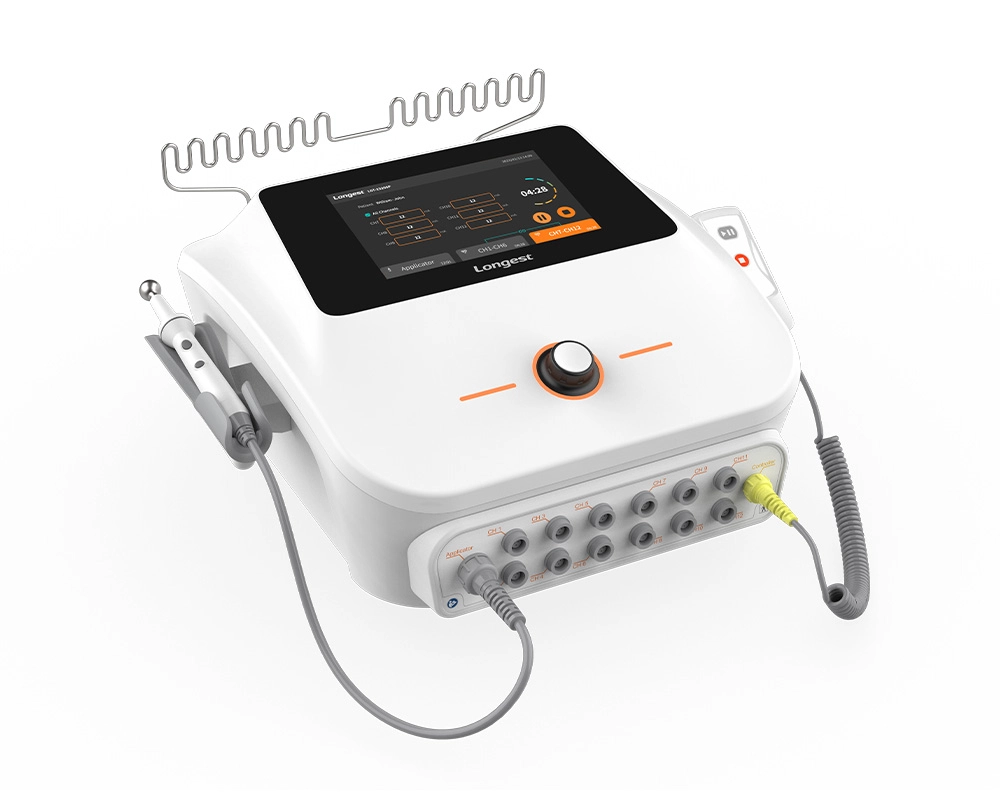
Professional 12-Channel Low-Frequency Electrical Stimulation Machine LGT-2320SP
LGT-2320SP is an advanced electrical stimulation sports training station. It leads to multisite high-efficiency strength gain and realizes bilateral balanced development with motor point detection.
Specifically designed for sports medicine professionals, this device is ideal for the treatment and rehabilitation of sports-related injuries. It delivers precise electrical impulses to targeted areas of the body, promoting pain relief, muscle strengthening, and accelerated recovery.

Call us:
+86 020 – 66353999

export@longest.cn

Address:
301 & 401 of Building 2 & Building 3, No. 96, Chuangqiang Road, Ningxi Street, Zengcheng District, Guangzhou, Guangdong Province, 511399, P.R. China.
Tips: The content on this website is a general description of the product.
The final configuration, parameters, and functions of the product may vary in accordance with the regulatory requirements of different countries and regions.
© 2025 Longest Medical. All Rights Reserved. Powered by gooeyun.
LongestMedical
LongestGloba
longest
guangzhou_longest
GzLongest