


Total Cost of Ownership: Operating Costs for Shockwave Units
- Assessing lifetime costs of a shockwave therapy machine
- Why understanding the total cost of a shockwave therapy machine matters
- Capital and acquisition costs for a shockwave therapy machine
- Service, maintenance and spare parts for a shockwave therapy machine
- Consumables and operating supplies for a shockwave therapy machine
- Training, staffing and throughput impacts of a shockwave therapy machine
- Downtime, repairs and opportunity costs for a shockwave therapy machine
- Energy, facility and regulatory compliance costs for a shockwave therapy machine
- Putting it together: typical cost component breakdown for a shockwave therapy machine
- Scenario-based TCO examples for shockwave therapy machine (5-year view)
- How to reduce TCO when procuring a shockwave therapy machine
- Supplier profile and product advantages for shockwave therapy machine — Longest Medical
- What Longest Medical offers to reduce TCO for shockwave therapy machine buyers
- Practical checklist when evaluating a shockwave therapy machine vendor
- Frequently Asked Questions (FAQs) about TCO and shockwave therapy machines
- 1. What is the biggest driver of TCO for a shockwave therapy machine?
- 2. How does focused vs. radial shockwave affect operating costs?
- 3. Are service contracts worth the money?
- 4. How can I estimate cost-per-treatment?
- 5. What questions should I ask vendors to compare TCO?
- 6. How often do shockwave transducers need replacement?
- 7. Can combining devices (e.g., shockwave + EMS) improve TCO?
- References and further reading
Assessing lifetime costs of a shockwave therapy machine
Why understanding the total cost of a shockwave therapy machine matters
When clinics, hospitals or medical aesthetic centers evaluate a shockwave therapy machine, the purchase price is only the starting point. Total Cost of Ownership (TCO) extends across the device lifecycle and includes acquisition, installation, maintenance, consumables, training, service, downtime and indirect costs such as patient throughput and reimbursement. A clear TCO model helps procurement teams compare offers objectively, forecast budgets, and choose devices that deliver the best clinical and financial return.
Capital and acquisition costs for a shockwave therapy machine
Acquisition costs include the invoice price, taxes, shipping, import duties, installation, and any bench testing or factory calibration on arrival. Shockwave therapy machines vary widely in configuration and price — from portable focused units to high-energy radial systems with integrated consoles. Typical acquisition considerations:
- Device type (focused vs. radial vs. combined): focused systems tend to have higher capital cost than basic radial devices.
- Included accessories: handpieces, gels, carts, footswitches and software licenses.
- Warranty length and scope (parts, labor, on-site response time).
- Financing terms or leasing options which change upfront cash flow and effective lifecycle cost.
Service, maintenance and spare parts for a shockwave therapy machine
Service and maintenance are typically the largest recurring line items after the initial purchase. Consider:
- Planned preventive maintenance schedules and recommended intervals from the manufacturer.
- Costs for transducer/handpiece replacement — some transducers have finite service lives based on pulse counts.
- Availability and price of spare parts in your region (import lead times can extend downtime).
- Service contract vs. pay-per-call economics — extended service contracts reduce unexpected repair liabilities but add fixed annual costs.
Estimate annual maintenance and service costs as a percentage of capital cost; for many electro-medical devices that falls in the range of 5–15% per year depending on usage intensity and warranty coverage.
Consumables and operating supplies for a shockwave therapy machine
Consumables include ultrasound-coupling gel, single-use covers (if used), disposable electrodes (if combined electrotherapy is integrated), and any replacement filters or small items. While consumables are generally a small portion of TCO, they scale with patient volume and must be budgeted continuously.
Training, staffing and throughput impacts of a shockwave therapy machine
Training is an often-underestimated cost. Effective device use requires clinician and technician training for protocols, safety, and optimizing patient throughput. Costs include:
- Initial vendor training and certification fees.
- Time cost for staff training (lost clinic hours or overtime).
- Recurring training for new staff and protocol updates.
Throughput is a revenue-side factor. A machine that enables faster sessions or better outcomes can increase patient turnover and revenue per device, improving the device’s effective cost per treatment.
Downtime, repairs and opportunity costs for a shockwave therapy machine
Unplanned downtime has both direct repair costs and indirect opportunity costs (lost appointments, rescheduling, patient dissatisfaction). Evaluate:
- Manufacturer mean-time-between-failure (MTBF) data, if available.
- Average repair lead times in your region (local field service vs. factory repair).
- Access to loaner devices or swap programs during repair.
Quantifying downtime cost: multiply average revenue per session by the number of lost sessions during an outage, and add any expedited shipping or emergency service High Qualitys.
Energy, facility and regulatory compliance costs for a shockwave therapy machine
Shockwave therapy machines are typically modest energy consumers compared with imaging systems, but facility costs still matter for high-volume centers. Account for:
- Electricity usage and local rates.
- Dedicated room requirements, shielding (rare for shockwave) and HVAC impacts if needed.
- Costs of regulatory compliance, periodic electrical safety testing (e.g., IEC 60601 checks), and local device registration or maintenance logs.
Putting it together: typical cost component breakdown for a shockwave therapy machine
Below is a conservative illustrative breakdown of TCO components. Use this as a starting template and adjust based on your local data and device specifics.
| Cost Component | Typical share of 5-year TCO (illustrative) | Notes |
|---|---|---|
| Capital / acquisition | 35–55% | Initial purchase, shipping, installation |
| Planned maintenance & service contracts | 10–20% | Annual service, preventive maintenance |
| Unplanned repairs & spare parts | 5–15% | Transducer replacements, labor for repairs |
| Consumables & disposables | 2–6% | Gel, covers, small items |
| Training & staff time | 3–8% | Initial + recurrent training |
| Downtime & opportunity cost | 2–10% | Lost revenue during outages |
| Energy, compliance, facility | 1–3% | Electricity, safety testing, room costs |
Scenario-based TCO examples for shockwave therapy machine (5-year view)
These scenarios are illustrative and designed to show how usage intensity and procurement choices change TCO. Values are example estimates for comparison, not price quotes.
| Scenario | Typical capital | Annual maintenance & service | Consumables (annual) | Estimated 5-year TCO |
|---|---|---|---|---|
| Low-use private clinic (150 treatments/yr) | $12,000 (basic radial) | $1,000 | $300 | ~$18,500 |
| Medium-volume physio center (800 treatments/yr) | $30,000 (mid-range focused) | $4,500 | $1,200 | ~$60,000 |
| High-volume hospital department (3,000 treatments/yr) | $55,000 (high-end focused) | $9,000 | $3,000 | ~$110,000 |
Notes: these examples illustrate how higher throughput increases maintenance, consumable and potential repair costs but lowers cost-per-treatment. Clinics should compute cost-per-treatment and compare to expected reimbursement or private-pay rates.
How to reduce TCO when procuring a shockwave therapy machine
Practical strategies to keep lifecycle costs predictable and low:
- Ask for total lifecycle costing from suppliers: include five-year service scenarios and spare parts pricing.
- Negotiate extended warranties and include key consumables in a bundled price.
- Prefer modular transducers or easily replaceable handpieces to limit repair downtime and cost.
- Evaluate supplier service network density — local field service providers reduce lead times and downtime impact.
- Consider leasing or pay-per-use models if capital budget is constrained; compare lease APR to expected maintenance savings.
- Document key performance indicators (uptime %, mean time to repair) in contract service-level agreements (SLAs).
Supplier profile and product advantages for shockwave therapy machine — Longest Medical
Founded in 2000, Longest Medical is a leading global rehabilitation and aesthetic solutions company, focusing on non-invasive medical solutions. Its products include shock wave therapy, compression therapy, electrotherapy, electrostatic oscillation therapy, cryotherapy, ultrasound therapy, and active-passive trainers. These product lines can provide comprehensive and powerful equipment solutions for physical therapy, neurological rehabilitation, postoperative recovery, veterinary diagnosis and treatment, medical aesthetics, and other fields.
What Longest Medical offers to reduce TCO for shockwave therapy machine buyers
When evaluating manufacturers, Longest Medical demonstrates several competitive advantages that can influence TCO:
- Product breadth: their portfolio (shockwave therapy machine, focused shockwave therapy machine, electrical muscle stimulation machine, air relax compression, active passive trainer, compression therapy machine, DVT medical device, lymphatic massage device, Pressotherapy machine) enables integrated therapy packages that can increase clinic utilization and revenue per patient.
- After-sales infrastructure: Longest’s global distribution and service network improves spare-parts availability and reduces repair lead times in many regions — lowering downtime costs.
- Training and protocol packages: vendor-supplied clinician training and treatment protocols can reduce internal training expense and accelerate patient throughput improvements.
- Cost of ownership focus: offering modular designs and commonly available consumables reduces long-term spare part costs.
- Regulatory and quality compliance: established manufacturer track record with international standards supports easier facility compliance and procurement approval.
Combined, these factors can improve uptime, reduce repair surprises and optimize revenue per device — all important levers when calculating TCO.
Practical checklist when evaluating a shockwave therapy machine vendor
Use this checklist during procurement to make TCO-driven choices:
- Request a 5-year TCO estimate from the vendor (capital + service + consumables + training + typical spare parts).
- Check for local service partners and average response times.
- Verify transducer/handpiece life (pulse counts) and replacement pricing.
- Confirm what training and marketing support is included to boost utilization.
- Negotiate SLAs for uptime and loaner device terms during repairs.
Frequently Asked Questions (FAQs) about TCO and shockwave therapy machines
1. What is the biggest driver of TCO for a shockwave therapy machine?
For most users, capital cost and service/maintenance are the two largest drivers. For high-volume centers, maintenance and spare parts can grow in importance relative to initial purchase price.
2. How does focused vs. radial shockwave affect operating costs?
Focused units generally cost more up front and may have higher service complexity; radial systems are often less expensive to buy but may not serve all clinical indications. Choose based on clinical needs and expected patient case mix.
3. Are service contracts worth the money?
Service contracts reduce financial variability by converting unpredictable repair bills into planned annual expenses. For clinics with limited in-house biomedical support, contracts are often cost-effective and reduce downtime risk.
4. How can I estimate cost-per-treatment?
Sum annual TCO (including amortized capital) and divide by annual number of treatments. Include staff time per session to get a full per-treatment cost.
5. What questions should I ask vendors to compare TCO?
Request: 5-year TCO breakdown, transducer life and replacement cost, typical repair turnaround time in your region, warranty and SLA details, included training, and consumable pricing.
6. How often do shockwave transducers need replacement?
Replacement frequency depends on the device model and pulse count. Many vendors specify expected pulse life; heavy-use centers should plan for periodic transducer replacement as part of lifecycle budgeting.
7. Can combining devices (e.g., shockwave + EMS) improve TCO?
Yes. Combining complementary modalities can increase device utilization per patient visit and diversify treatment offerings, improving revenue and lowering effective cost-per-treatment.
If you want a tailored five-year TCO estimate for your clinic (including estimated cost-per-treatment and break-even analysis), contact our team to share your expected patient volume and case mix — we can model scenarios and recommend models. View product specifications or request a quote at Longest Medical: https://www.longestmedical.com/ (or contact your local Longest representative).
References and further reading
- World Health Organization. Medical devices. https://www.who.int/health-topics/medical-devices (accessed 2025-12-20)
- WHO. Medical equipment maintenance programmes for improved health services. https://www.who.int/publications/i/item/9789241549803 (accessed 2025-12-20)
- PubMed — review articles on extracorporeal shock wave therapy (ESWT). Example review: https://pubmed.ncbi.nlm.nih.gov/19520811/ (accessed 2025-12-20)
- Storz Medical (manufacturer information on shockwave devices): https://www.storz-medical.com/ (accessed 2025-12-20)
- Grand View Research. Shock Wave Therapy Devices Market overview. https://www.grandviewresearch.com/industry-analysis/shock-wave-therapy-devices-market (accessed 2025-12-20)
- Longest Medical — corporate and product pages. https://www.longestmedical.com/ (accessed 2025-12-20)
Data and percentages in this article are illustrative and should be adjusted to reflect specific device models, local service pricing, and clinic workflows. For a bespoke TCO calculation, provide device options and your expected annual treatment volume and staff costs.
Can I Do Shockwave Therapy at Home? A Complete Guide for Safe and Effective Use
Chinese Medical Device Companies: A Deep Dive into Industry Leaders with Longest Medical
The Ultimate Guide to Compression Boots Recovery in Physiotherapy
Effective Exercise Program for Cardiac Rehab: Comprehensive Guide by Longest Medical
LGT-2210DS
How to clean the sleeve?
Use a soft cloth and mild cleaning agent with warm water not exceeding 40°C to gently wipe the inner and outer surfaces of the sleeve. Then disinfect it with 75% medical alcohol. Do not sterilize the sleeve in high - pressure or high - temperature environments.
LGT-231
Does your product come with a warranty?
Yes, we're committed to delivering quality products and excellent after-sales service to enhance your overall experience.
Electromagnetic Stimulator
What is the core principle of magnetic stimulation therapy?
Based on the principle of Faraday's electromagnetic induction, the pulsed magnetic field generated by electric current passing through a coil can penetrate the skin and bones, produce an induced current in human tissues, and then stimulate deep nerves, muscles and bones to achieve therapeutic purposes.
LGT-2650BP
How long does a single treatment session with the LGT-2650BP take?
A single treatment lasts approximately 20-30 minutes per area. There is no recovery period after treatment, and users can resume normal work and life immediately. For optimal results, a course of 8-12 treatments is recommended, with 2-3 sessions per week.
2520GP
What are the possible local adverse reactions after focused shockwave treatment?
Local skin redness, swelling, ecchymosis, and hematoma may occur. There could also be an increased local pain response, as well as sensations like pins and needles, numbness, or hypoesthesia. In some cases, contact dermatitis might be observed. These reactions usually subside quickly. However, if you experience any discomfort that persists or worsens, it is important to inform your doctor promptly.
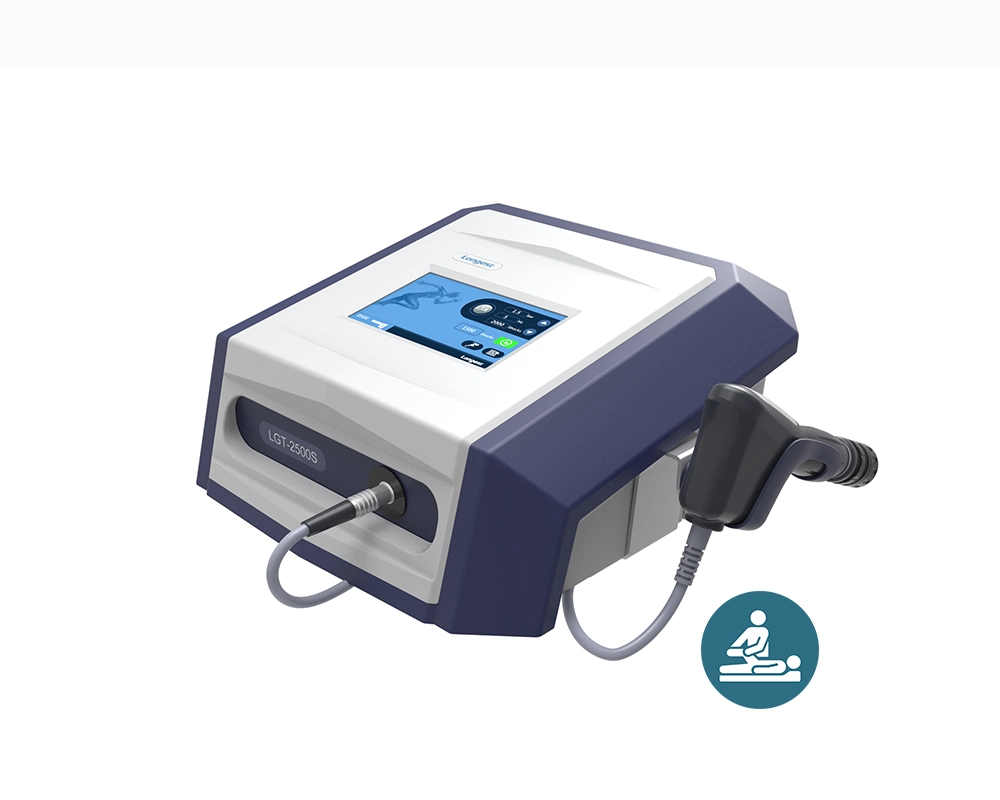
Electrical Extracorporeal Shock Wave Therapy Device PowerShocker LGT-2500S
The LGT-2500S is a portable, tabletop extracorporeal shock wave therapy (ESWT) device. It effectively stimulates the healing of troublesome tissue, alleviates pain, and non-invasively supports the recovery of the patient's tissue. It is a completely natural and drug-free option for various conditions in physiotherapy, veterinary medicine, and aesthetic medicine.
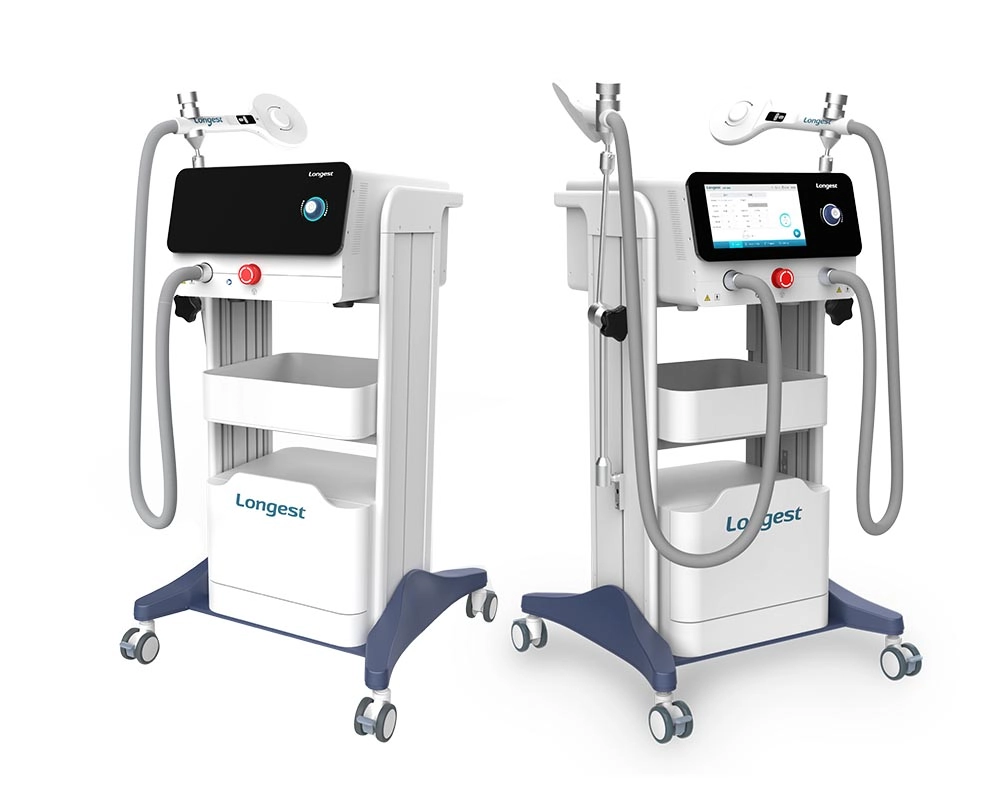
Electromagnetic Stimulator for Musculoskeletal Rehabilitation LGT-2660AP/BP
The LGT-2660 Series Electromagnetic Stimulator for Musculoskeletal Pain is an advanced rehabilitation device engineered to address a wide range of musculoskeletal pain conditions and associated dysfunctions. Operating on the principle of electromagnetic induction, it generates induced currents to regulate neuromuscular function while delivering deeply penetrating energy—this energy transcends superficial tissues to act directly on muscles, joints, and bones. For both acute and chronic musculoskeletal pain, it provides a safe, efficient, and medication-free new solution.
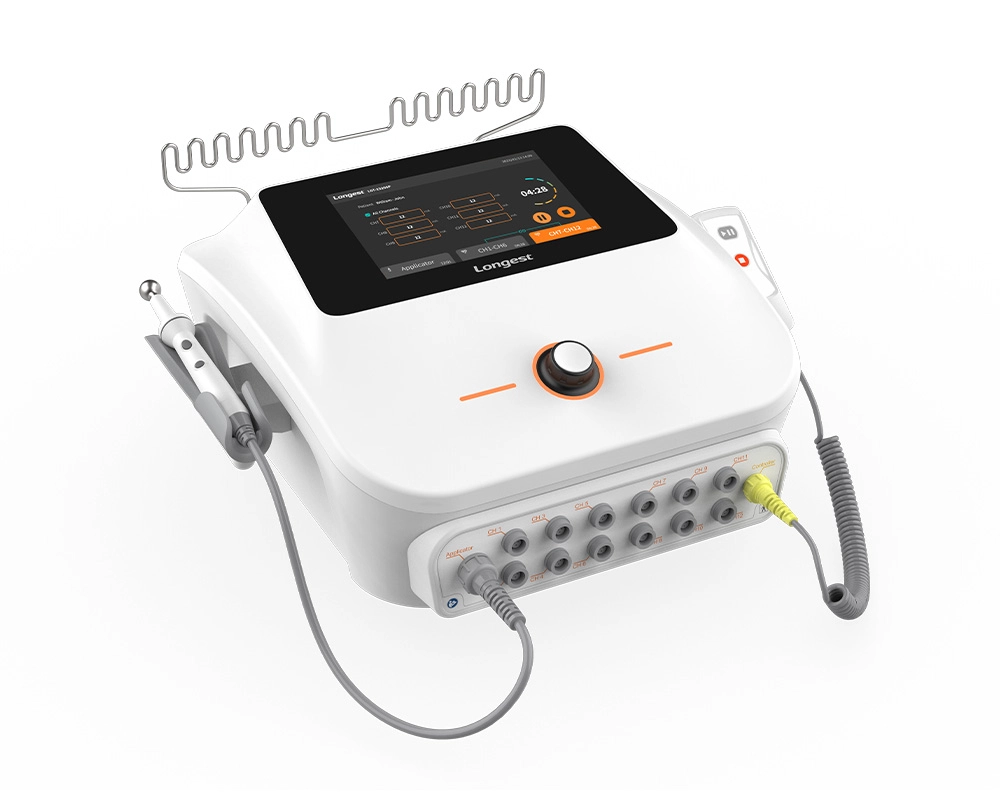
Professional 12-Channel Low-Frequency Electrical Stimulation Machine LGT-2320SP
LGT-2320SP is an advanced electrical stimulation sports training station. It leads to multisite high-efficiency strength gain and realizes bilateral balanced development with motor point detection.
Specifically designed for sports medicine professionals, this device is ideal for the treatment and rehabilitation of sports-related injuries. It delivers precise electrical impulses to targeted areas of the body, promoting pain relief, muscle strengthening, and accelerated recovery.
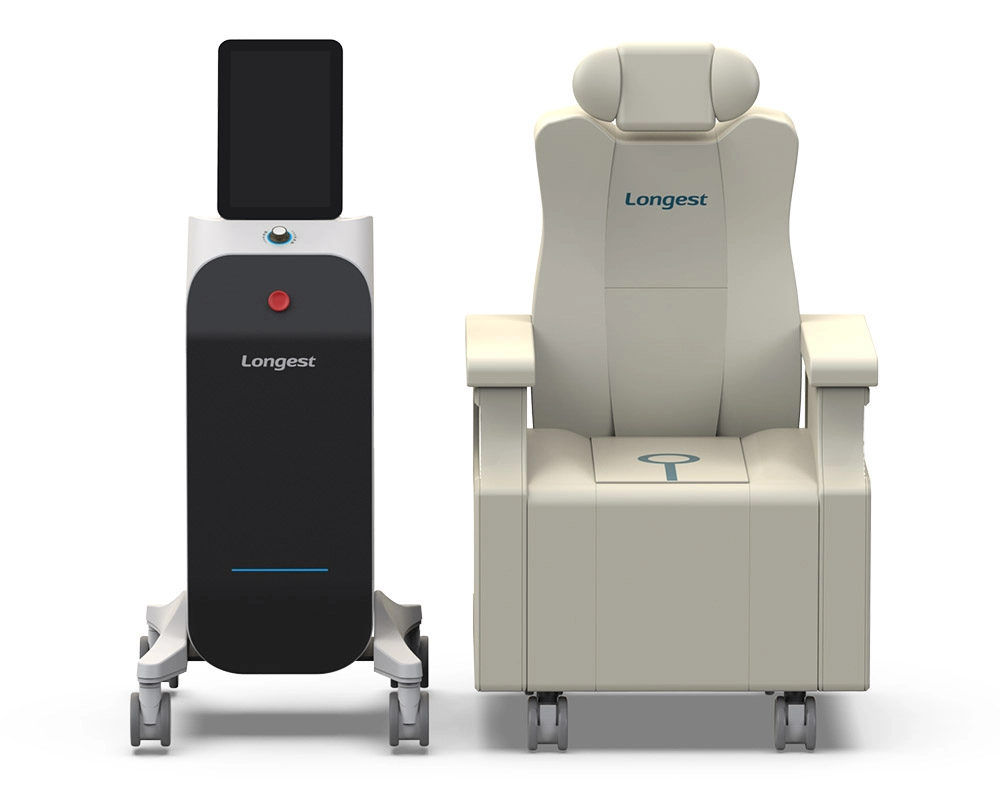
Electromagnetic Stimulator for Pelvic floor rehabilitation LGT-2640AP
The LGT-2640AP Pelvic Floor Magnetic Stimulator is a precision rehabilitation device designed for targeted pelvic floor therapy. Featuring 24 visualized preset protocols (paired with anatomical diagrams), customizable treatment plans, and a pre-adaptation function, it delivers non-invasive, painless stimulation to support postpartum recovery, male pelvic floor rehabilitation, and geriatric pelvic health.

Call us:
+86 020 – 66353999

export@longest.cn

Address:
301 & 401 of Building 2 & Building 3, No. 96, Chuangqiang Road, Ningxi Street, Zengcheng District, Guangzhou, Guangdong Province, 511399, P.R. China.
Tips: The content on this website is a general description of the product.
The final configuration, parameters, and functions of the product may vary in accordance with the regulatory requirements of different countries and regions.
© 2025 Longest Medical. All Rights Reserved. Powered by gooeyun.
LongestMedical
LongestGloba
longest
guangzhou_longest
GzLongest