


Service & Maintenance: Reducing Downtime for Shockwave Machines
- Maximizing uptime for therapeutic devices: an operational priority
- Why service & maintenance of shockwave therapy machine matters
- Common causes of shockwave therapy machine downtime
- Preventive maintenance vs reactive maintenance for shockwave therapy machine
- Practical preventive maintenance checklist for shockwave therapy machine
- Calibration, validation and performance verification for a shockwave therapy machine
- Inventory strategy: spare parts, consumables and mean time to repair (MTTR)
- Service contracts, warranty & remote diagnostics for shockwave therapy machine
- Staff training, SOPs and user-level maintenance
- Monitoring KPIs: MTBF, MTTR, utilization and downtime cost
- Data-driven maintenance and predictive strategies for shockwave therapy machine
- Regulatory, safety and documentation considerations for medical facilities
- Choosing a vendor or service partner for your shockwave therapy machine
- Cost-benefit snapshot: investing in maintenance
- Longest Medical — company capabilities and how they support uptime
- Why consider Longest Medical for shockwave therapy machine and related services
- Implementation plan: a 90-day roadmap to reduce downtime
- Final recommendations
- Frequently Asked Questions (FAQ)
- 1. How often should a shockwave therapy machine be calibrated?
- 2. What daily checks can clinical staff perform to prevent faults?
- 3. Are third-party service contracts safe for medical devices?
- 4. What spare parts should I keep on hand for a shockwave therapy machine?
- 5. Can remote diagnostics really reduce downtime?
- 6. How do I calculate the ROI of a preventive maintenance program?
- Contact & product inquiry
- References & resources
Maximizing uptime for therapeutic devices: an operational priority
Why service & maintenance of shockwave therapy machine matters
Shockwave therapy machines are complex electro-mechanical-medical devices combining high-voltage pulsed electronics, transducers, coupling systems, and user interfaces. For clinics, rehabilitation centers, and medical aesthetics practices the machine uptime directly impacts patient throughput, revenue, clinical outcomes, and regulatory compliance. Effective service and maintenance programs reduce unplanned downtime, extend usable life, and lower the total cost of ownership.
Common causes of shockwave therapy machine downtime
Understanding failure modes is the first step in designing maintenance interventions. Typical causes include:
- Wear of transducer elements and coupling heads due to repeated impacts and improper coupling medium.
- High-voltage electronics degradation (capacitors, high-voltage switches) from thermal stress or surge events.
- Mechanical fatigue in pistons, connectors or articulations in focused shockwave heads.
- Software faults, calibration drift, or corrupted settings impacting energy delivery.
- Inadequate cleaning, leading to contamination or corrosion of probes and connectors.
- Poorly managed consumables and lack of spare parts increasing mean time to repair (MTTR).
Preventive maintenance vs reactive maintenance for shockwave therapy machine
Choosing the right maintenance strategy saves costs. Below is a concise comparison to help managers decide on an optimal mix.
| Aspect | Reactive Maintenance | Preventive Maintenance (Scheduled) |
|---|---|---|
| Downtime | High, unpredictable | Lower and predictable |
| Cost profile | Higher emergency repair costs; lost revenue during outages | Regular, budgetable costs; lower failure-related expenses |
| Equipment lifespan | Shorter due to stress and delayed repairs | Extended through early detection and replacement |
| Quality & safety risk | Higher risk of inconsistent therapy delivery | Better consistency, easier compliance with safety checks |
Practical preventive maintenance checklist for shockwave therapy machine
The following table is a field-ready checklist that clinical managers or biomedical teams can adopt. Frequency should be adapted by usage intensity and manufacturer recommendations.
| Task | Who | Frequency | What to check |
|---|---|---|---|
| Visual inspection of transducer and coupling head | Clinician / Technician | Daily / Before first patient | Cracks, worn surfaces, proper coupling gel present |
| Functional test (energy output, pulse consistency) | Biomedical Engineer / Authorized Service | Monthly or per manufacturer | Energy meter readings, waveform stability |
| Electrical safety test (insulation, grounding) | Certified Technician | Annually | Leakage currents, earth continuity |
| Software and firmware updates | Service Engineer | As released | Install patches, validate functionality |
| Consumables & spare parts inventory check | Clinic Manager | Monthly | Stock of coupling gel, spare applicators/transducers, fuses, cables |
| Calibration and output verification | Authorized Service | Annually / After major repair | Calibrate to factory spec, document certificate |
Calibration, validation and performance verification for a shockwave therapy machine
Regular calibration ensures the energy delivered matches treatment protocols. Key steps include:
- Use manufacturer-recommended measurement equipment (energy meter, hydrophone for focused systems).
- Perform measurements at defined energy levels and frequencies; compare to baseline performance certificate.
- Retain calibration certificates and integrate into equipment log for audit and regulatory compliance.
Calibration should be performed by the manufacturer or accredited service partner to maintain warranty and certification integrity.
Inventory strategy: spare parts, consumables and mean time to repair (MTTR)
Maintaining a minimal onsite stock of fast-moving spare parts reduces MTTR significantly. Prioritize items that historically cause the most downtime:
- Transducer heads or cartridges (if removable)
- High-voltage fuses and connectors
- Coupling media / gels and disposable contact covers
- Interface cables, footswitches, and fuses
Track parts usage in a simple inventory sheet and set reorder points based on vendor lead times. For critical systems, consider a small managed consignment with the OEM.
Service contracts, warranty & remote diagnostics for shockwave therapy machine
Service agreements are a cornerstone of uptime management. When negotiating contracts, consider:
- Response time commitments (e.g., 4-hour, next-business-day on-site)
- Scope of coverage: parts, labor, software updates, calibration
- Options for remote diagnostics and telemetry to pre-diagnose faults
- Escalation paths and replacement loan units for prolonged repairs
Remote diagnostics reduce truck rolls and speed up fixes. Modern shockwave therapy machines often include error logs and self-test routines—ensure the vendor supports secure remote access and data privacy.
Staff training, SOPs and user-level maintenance
User competence reduces misuse-related failures. Training should include:
- Daily start-up/shutdown checks and correct coupling technique to avoid cavitation damage.
- Recognizing early warning signs (unusual sounds, unstable energy delivery).
- Proper cleaning, disinfecting, and storage of applicators.
- Documenting incidents and initiating service calls with clear fault descriptions.
Develop easy-to-follow SOPs and keep quick reference guides near the device. Regular refreshers and competency assessments help maintain standards.
Monitoring KPIs: MTBF, MTTR, utilization and downtime cost
Define and track a few key performance indicators:
- MTBF (Mean Time Between Failures) — longer is better; track per device model.
- MTTR (Mean Time To Repair) — aim to minimize via spares and service contracts.
- Utilization rate — percent of operating hours vs available hours.
- Downtime cost — calculate lost revenue per hour to quantify ROI of maintenance.
Example: if average treatment time is 30 minutes and revenue per treatment is $120, then 8 hours of downtime could represent up to $1,920 in lost revenue (assuming a fully booked schedule). Use such calculations to justify preventive investment.
Data-driven maintenance and predictive strategies for shockwave therapy machine
Where available, instrument logs, error codes, and usage telemetry enable predictive maintenance. Techniques include:
- Trend analysis of energy output and pulse consistency to detect drift.
- Threshold-based alerts when components approach end-of-life metrics.
- Scheduled replacement of high-failure items based on usage cycles rather than calendar time.
Predictive maintenance reduces emergency repairs and is increasingly feasible as devices include more diagnostics.
Regulatory, safety and documentation considerations for medical facilities
Maintain a device log with service records, calibration certificates, and incident reports to support internal governance and external audits. Follow applicable standards (e.g., ISO 13485 for medical device lifecycle processes, IEC 60601 series for electrical safety) and local regulatory requirements. Keep software update records and validate after each major change.
Choosing a vendor or service partner for your shockwave therapy machine
Key selection criteria:
- Proven field service network and response times in your region.
- Availability of OEM spare parts and manufacturer-trained engineers.
- Clear warranty policy and transparent service pricing.
- Capability for remote diagnostics and software maintenance.
- Strong clinical support and user training materials.
Cost-benefit snapshot: investing in maintenance
While preventive programs have upfront costs, they typically reduce unplanned downtime and extend machine life. For many clinics, reduced cancellations, fewer emergency repairs, and consistent treatment quality make maintenance investments financially beneficial within 12–24 months.
Longest Medical — company capabilities and how they support uptime
Founded in 2000, Longest Medical is a leading global rehabilitation and aesthetic solutions company, focusing on non-invasive medical solutions. Its products include shock wave therapy, compression therapy, electrotherapy, electrostatic oscillation therapy, cryotherapy, ultrasound therapy, and active-passive trainers. These product lines can provide comprehensive and powerful equipment solutions for physical therapy, neurological rehabilitation, postoperative recovery, veterinary diagnosis and treatment, medical aesthetics, and other fields.
Why consider Longest Medical for shockwave therapy machine and related services
Longest Medical combines manufacturing scale with clinical focus. Key competitive advantages include:
- Comprehensive product portfolio: shockwave therapy machine and focused shockwave therapy machine, electrical muscle stimulation machine, air relax compression, active passive trainer, compression therapy machine, DVT medical device, lymphatic massage device, and Pressotherapy machine.
- Integrated solutions across rehabilitation and aesthetics that simplify procurement and service coordination.
- Global service network and experience since 2000, supporting spare parts, calibration, and training.
- Emphasis on non-invasive modalities and technology development tailored to clinical workflows.
When evaluating vendors, confirm details such as warranty duration, on-site response times, spare part lead times, and access to accredited technicians. Longest Medical’s product breadth makes it possible to standardize maintenance practices across multiple device classes in a clinic.
Implementation plan: a 90-day roadmap to reduce downtime
A practical short-term roadmap to reduce shockwave therapy machine downtime:
- Day 0–14: Audit current equipment condition, review service history, and compile spare parts list.
- Day 15–30: Establish SOPs, train staff on daily checks, and stock critical consumables (coupling gel, spare applicators).
- Day 31–60: Sign or upgrade service contract with defined SLAs; schedule baseline calibration.
- Day 61–90: Implement KPI tracking (MTBF/MTTR), review first-month data, and adjust preventive schedules.
Final recommendations
To minimize downtime and protect revenue and patient safety: adopt a preventive-focused maintenance program, secure a strong service agreement with rapid response and remote diagnostics, maintain essential spare parts, and invest in staff training and calibration. Use data to refine your program and quantify ROI to stakeholders.
Frequently Asked Questions (FAQ)
1. How often should a shockwave therapy machine be calibrated?
Calibration frequency depends on usage and manufacturer guidance. Typical practice is annual calibration by an authorized service provider or after any major repair. High-volume centers may opt for semi-annual checks.
2. What daily checks can clinical staff perform to prevent faults?
Daily checks include visual inspection of the applicator for damage, confirming coupling gel availability, verifying basic functional test (device powers on and displays normal status), and noting unusual sounds or error codes.
3. Are third-party service contracts safe for medical devices?
Third-party service can be acceptable if the provider is certified, uses OEM parts or equivalent quality parts, and provides traceable calibration certificates. Verify that third-party servicing does not void warranty or regulatory compliance.
4. What spare parts should I keep on hand for a shockwave therapy machine?
Keep an inventory of consumables and fast-moving parts: coupling gel, disposable covers, applicator heads (if user-replaceable), fuses, and critical cables. Consult your manufacturer for a recommended spare parts list.
5. Can remote diagnostics really reduce downtime?
Yes. Remote diagnostics enable engineers to read error logs, perform initial troubleshooting, and often identify the required parts before a site visit—reducing MTTR and often avoiding unnecessary onsite interventions.
6. How do I calculate the ROI of a preventive maintenance program?
Estimate current downtime cost (lost revenue per hour × downtime hours), add repair and emergency service costs, then compare to the annual cost of a preventive program and service contract. The difference indicates potential savings and payback period.
Contact & product inquiry
To discuss service contracts, calibration, or to view shockwave therapy machine options (including focused shockwave systems), contact your Longest Medical representative or visit the manufacturer’s product pages for detailed specs and service offerings. For immediate assistance, request a preventive maintenance quote or schedule a baseline calibration to start reducing downtime today.
References & resources
- U.S. Food & Drug Administration — Medical Devices. https://www.fda.gov/medical-devices (accessed 2024-06-01)
- World Health Organization — Medical devices overview. https://www.who.int/health-topics/medical-devices (accessed 2024-06-01)
- ISO 13485 — Medical devices — Quality management systems. https://www.iso.org/standard/59752. (accessed 2024-06-01)
- IEC 60601 series — Medical electrical equipment safety standards. https://www.iso.org/ics/11.040.01/x/ (accessed 2024-06-01)
- PubMed — central resource for evidence on extracorporeal shock wave therapy. https://pubmed.ncbi.nlm.nih.gov/?term=extracorporeal+shock+wave+therapy (accessed 2024-06-01)
Active Passive Trainer Cost in Canada: A Practical Buyer’s Guide
Which Equipment Is Best to Reduce Belly Fat? A Comprehensive Guide by Longest Medical
Wholesale electrical muscle stimulation machine manufacturer and supplier
Active Passive Trainer Cost in Las Vegas: Prices, Buying Options, and ROI Guide
2500X
Can the acoustic wave therapy be used in combination with microneedling or laser therapy?
Yes. Acoustic wave therapy combines well with micro-needling or laser therapy. It boosts collagen and elastin and fades fine lines and wrinkles. But when using them together, get guidance from a pro doctor or beautician. Assess risks and benefits according to your skin and goals.
5- LGT-2500X copywriting, physical therapy version
Does your product come with a warranty?
Yes, we're committed to delivering quality products and excellent after-sales service to enhance your overall experience.
LGT-2500F Copywriting - Physical Therapy Edition
Can treatment plans be customized to meet patient needs?
Absolutely. Treatment plans can be personalized for each patient based on a professional diagnosis of their condition and an understanding of their responses. Moreover, practitioners can save each patient's preferred parameters for convenient access in the future. The system is capable of storing up to 5,000 patient files.
2500s plus beauty version
What are the characteristics of the radial pulse wave therapy machine PowerShocker LGT-2500S Plus?
The PowerShocker LGT-2500S Plus is characterized by compact dimension, easy operation, reliability, and low maintenance.
Products
What are the requirements to become a distributor of the company?
To become our distributor, you need to have lawful business qualifications, certain experience in medical device sales and market channels, a stable sales team, and good commercial credibility. For specific cooperation details and preferential policies, please send an email to export@longest.cn or submit an inquiry for detailed communication.
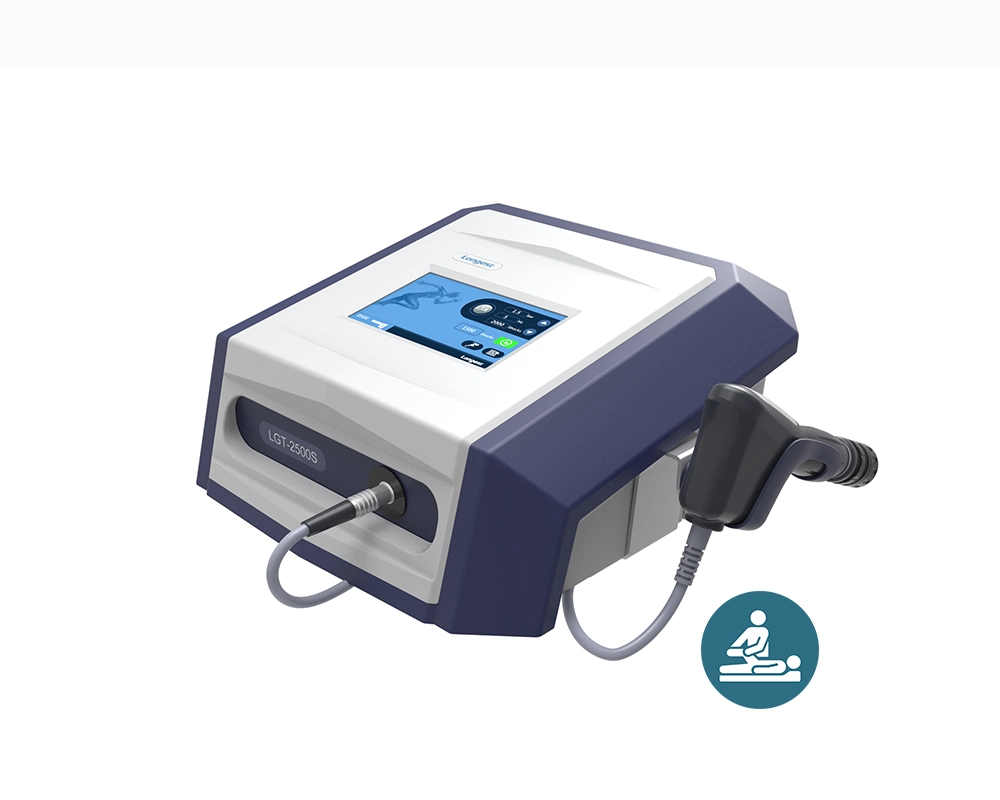
Electrical Extracorporeal Shock Wave Therapy Device PowerShocker LGT-2500S
The LGT-2500S is a portable, tabletop extracorporeal shock wave therapy (ESWT) device. It effectively stimulates the healing of troublesome tissue, alleviates pain, and non-invasively supports the recovery of the patient's tissue. It is a completely natural and drug-free option for various conditions in physiotherapy, veterinary medicine, and aesthetic medicine.
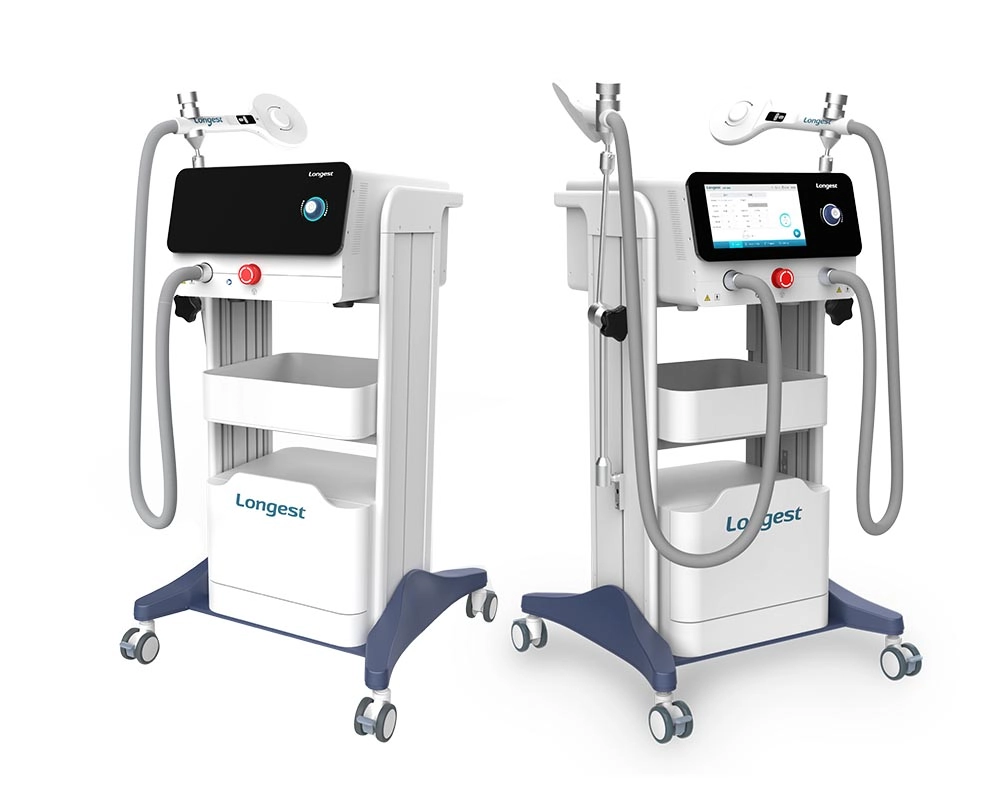
Electromagnetic Stimulator for Musculoskeletal Rehabilitation LGT-2660AP/BP
The LGT-2660 Series Electromagnetic Stimulator for Musculoskeletal Pain is an advanced rehabilitation device engineered to address a wide range of musculoskeletal pain conditions and associated dysfunctions. Operating on the principle of electromagnetic induction, it generates induced currents to regulate neuromuscular function while delivering deeply penetrating energy—this energy transcends superficial tissues to act directly on muscles, joints, and bones. For both acute and chronic musculoskeletal pain, it provides a safe, efficient, and medication-free new solution.
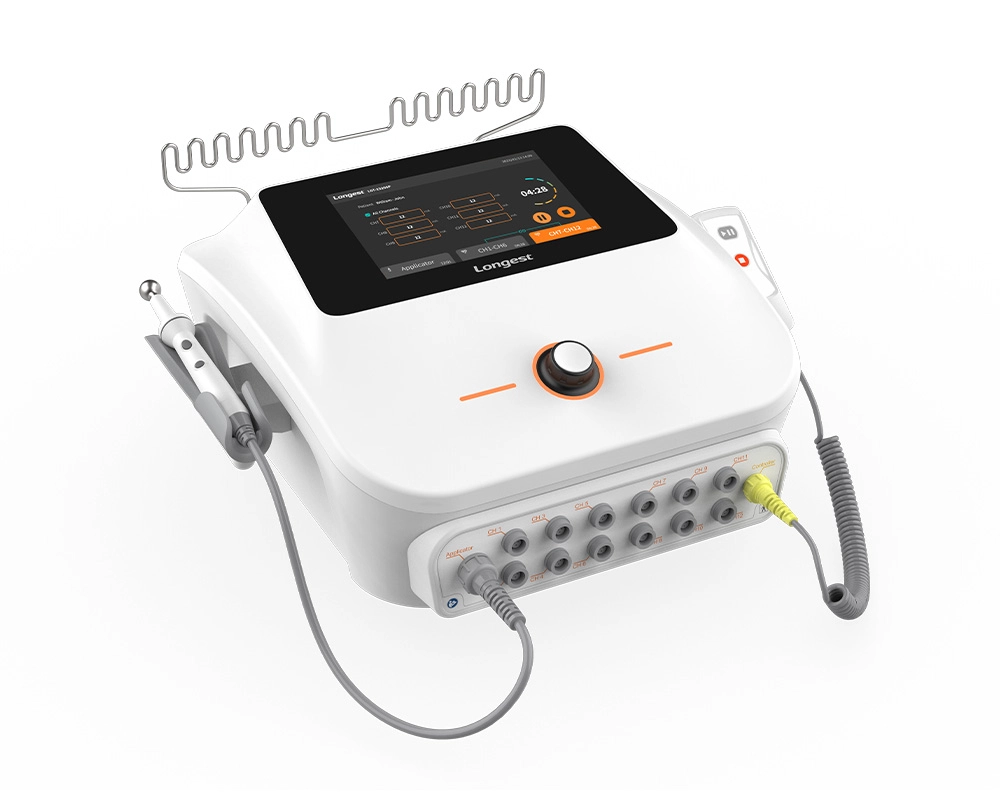
Professional 12-Channel Low-Frequency Electrical Stimulation Machine LGT-2320SP
LGT-2320SP is an advanced electrical stimulation sports training station. It leads to multisite high-efficiency strength gain and realizes bilateral balanced development with motor point detection.
Specifically designed for sports medicine professionals, this device is ideal for the treatment and rehabilitation of sports-related injuries. It delivers precise electrical impulses to targeted areas of the body, promoting pain relief, muscle strengthening, and accelerated recovery.
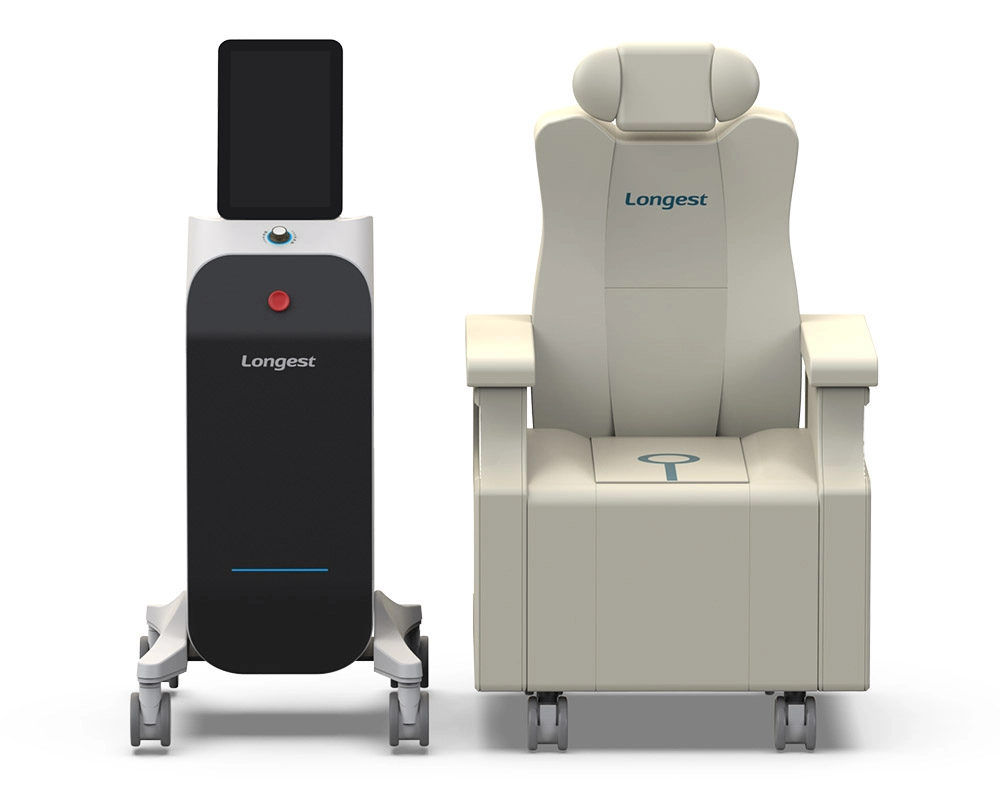
Electromagnetic Stimulator for Pelvic floor rehabilitation LGT-2640AP
The LGT-2640AP Pelvic Floor Magnetic Stimulator is a precision rehabilitation device designed for targeted pelvic floor therapy. Featuring 24 visualized preset protocols (paired with anatomical diagrams), customizable treatment plans, and a pre-adaptation function, it delivers non-invasive, painless stimulation to support postpartum recovery, male pelvic floor rehabilitation, and geriatric pelvic health.

Call us:
+86 020 – 66353999

export@longest.cn

Address:
301 & 401 of Building 2 & Building 3, No. 96, Chuangqiang Road, Ningxi Street, Zengcheng District, Guangzhou, Guangdong Province, 511399, P.R. China.
Tips: The content on this website is a general description of the product.
The final configuration, parameters, and functions of the product may vary in accordance with the regulatory requirements of different countries and regions.
© 2025 Longest Medical. All Rights Reserved. Powered by gooeyun.
LongestMedical
LongestGloba
longest
guangzhou_longest
GzLongest